While it’s a naturally occurring mineral, asbestos is anything but harmless. Unfortunately, before the dangers became known, it started to be included in construction materials, thanks to its strength, insulation and heat-resistance. But if the fibres become free and airborne, they can become lodged in the lungs, causing diseases like mesothelioma, asbestosis and cancer.
While it was banned in the UK in 1999, asbestos is often still present in homes built or renovated before this time. It doesn’t look dangerous, but it’s also extremely hard to identify by sight alone.
So, what does asbestos look like? Read on to find out.
What does asbestos look like in your house?
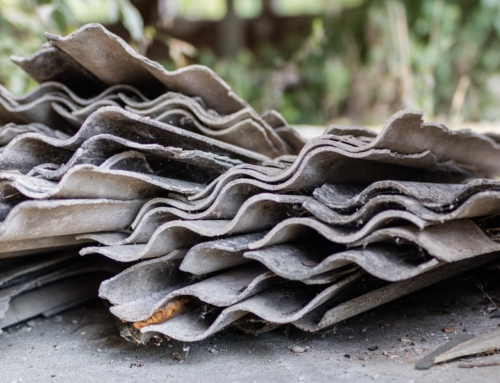
In most properties, asbestos isn’t visible. It’s hidden within building materials, depending on the materials. It’s these products that are easier to identify than the asbestos itself. For example, textured coatings (such as Artex ceilings) have swirled or stippled finishes. Pipe lagging will resemble white, grey or crumbly plaster. Asbestos cement sheets (flat, corrugated roofing panels) will look like standard grey cement. That’s why identification is so difficult. Fibres are rarely visible to the naked eye.
How likely is it to have asbestos in your house?
Any homes built before 2000 could contain asbestos, especially those built or renovated between the 1950s and 1980s, when usage was at its peak. Even properties constructed later may have asbestos-containing materials (ACMs) present if the builder used old stock.
Does each type of asbestos look different?
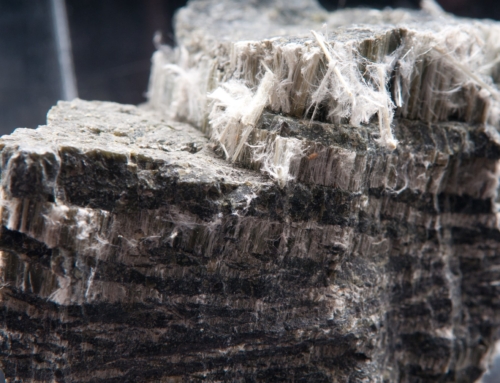
The 3 types of asbestos are chrysotile (white asbestos), amosite (brown asbestos) and crocidolite (blue asbestos). Chrysotile has fine and curly white fibres, but in materials it usually appears as cement, insulation board or textured coatings. Amosite fibres are straight and brown, commonly found in insulation boards and pipe lagging. Crocidolite has needle-like blue fibres, used in high-temperature insulation.
In most cases, the fibres are not visible, so the different types look similar to each other.
How do I identify asbestos?
You can’t reliably identify asbestos by appearance alone. The only accurate method is laboratory testing carried out by a UKAS-accredited asbestos surveyor. A professional survey will identify potential ACMs, sample them and test them. You’ll then get a report to help you create or update your management plan. Attempting to disturb or sample suspect materials yourself can release harmful fibres, so always use a qualified professional.
Can you live in a house with asbestos?
As long as ACMs remain in good condition and undisturbed, they typically pose minimal risk. Problems arise when asbestos is cut, drilled or damaged (and all materials deteriorate over time), releasing fibres into the air. Regular monitoring and professional advice are vital.
What do I do if I suspect asbestos?
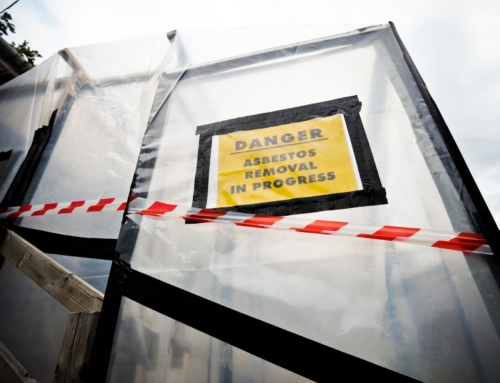
If you believe you’ve found asbestos in your home, stop work immediately and avoid disturbing the material. Do not drill, sand or break the suspected product. Contact a licensed asbestos surveyor or removal contractor for a fresh inspection and testing.
If confirmed, follow their recommendations for repair, encapsulation or removal.
Get a certified asbestos survey in London and Surrey
Goodbye Asbestos offers professional asbestos surveys and removal services in New Addington, New Malden and beyond. Contact Goodbye Asbestos now for a free quote.